
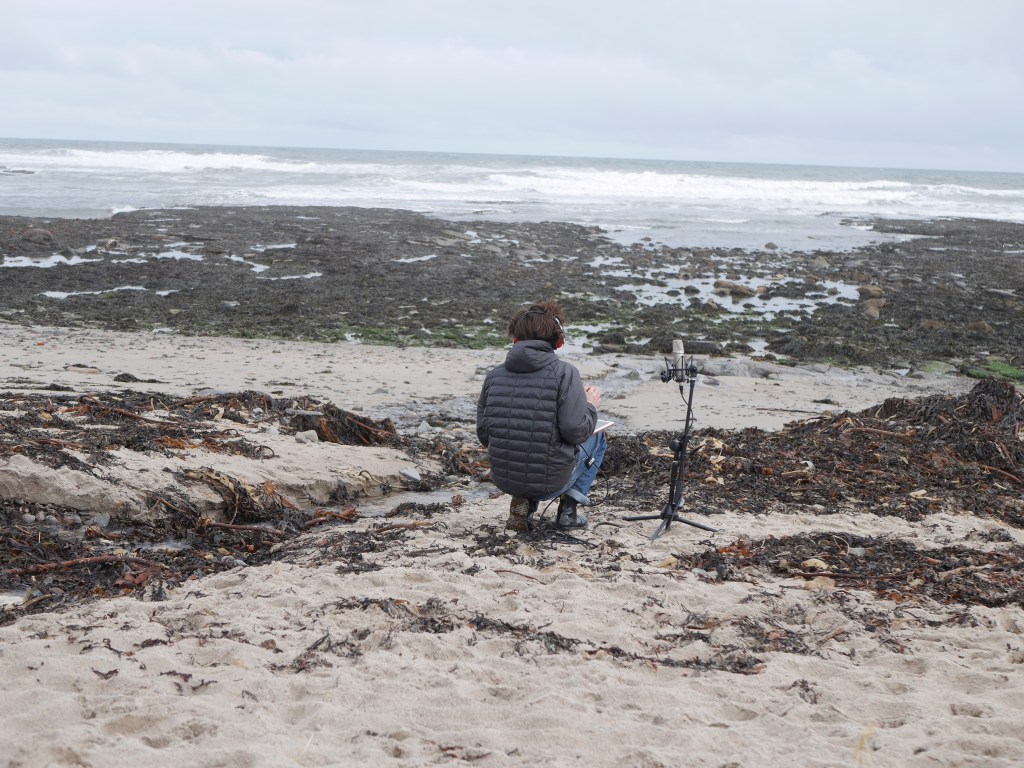
Discussing the song recordings, as the basis of musical motifs in the piece is necessary. To create music that was based directly on the material world was a key starting point. The sensations of the material world, along with the voices of the local, are brought to the listener, entangling the listener and the composition. All the musical material is based on four separate field recordings that I made in the North East; half rural and half urban. Two recordings are in Newcastle city center, the first around a university campus, and the second is between the quayside and the center. These points of the city provided a juxtaposition; new buildings in a pedestrianized area that optimized a Neo-liberal space, with dull architecture, small supermarkets and cafes, and then older buildings, independent bars and take away shops, that hardly survive, and often are constantly changing. The third recording was made in a very small seaside village called Seahouses, where building work was being done on the harbor, and growing tourism had completely changed the area. The last recording was made on a beach near Beadnell (Berwick upon Tweed). These places were chosen carefully, all massively effected by cultural, ecological and political problems but all places that could be relatable for listeners.
To compose from the sounds in these spaces I had to listen to them, and find motifs, and freeze them in time, allowing them to become moments in my composition. Different motifs were taken and then layered, and at times, they hopefully create the sonic illusion of a city, village, or beach. These motifs do not sound like their source material always, as they are harmonized, rhythmically augmented and slowed down, and then sewn into a new soundscape, but as a new wholeness, with voices of the local, from past and present, and descriptions of the landscape. This should further immerse the listener into the North-East local that I have based the piece on, but also beyond that. The local here gives way the trans-local, with an aesthetic wholeness.
The Sound-recordings are featured Bellow:
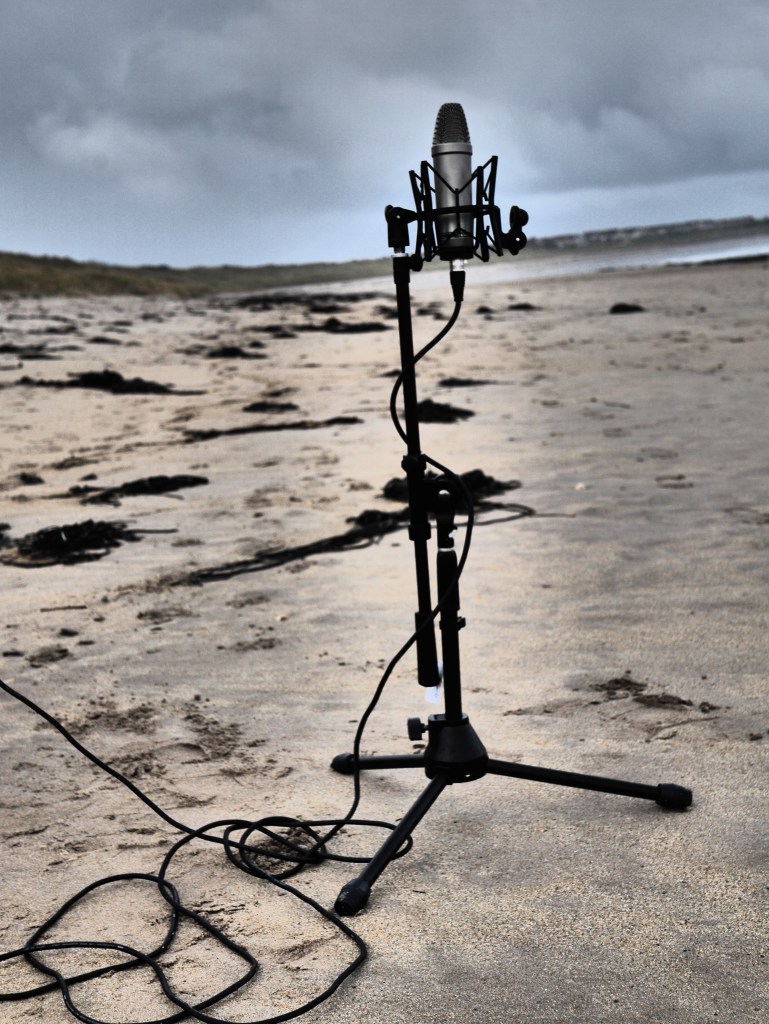
Quayside
https://soundcloud.com/user63435013/quayside
https://soundcloud.com/user63435013/quayside-1
University
https://soundcloud.com/user63435013/university
Seahouses
https://soundcloud.com/user63435013/seahouses
https://soundcloud.com/user63435013/seahouses-1
Beach
https://soundcloud.com/user63435013/beach-and-sea-2
https://soundcloud.com/user63435013/beach-and-sea-3
Composing from these sources
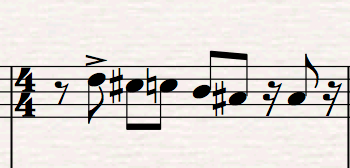
The very short sections of the score show a clear example of the compositional process. These motifs are simply based on the ‘Quayside’ sound recording, and hopefully, in an immediate sense, capture the essence of a car. What I mean by this is the music creates the sonic information that one would still think that this may sound like a car, the timpani acting like the wheels on a street, and the cello like a motor. This creates the ‘thing’ car, hopefully in the simplest way possible. It is just two instruments that have been used to create a sensation that may be associated with the signifier ‘car’. A certain kind of musical economy is being used to hear, to capture the thing, which could be compared to an economy of language, popular with modernist poets, like William Carlos Williams and, more applicably, Basil Bunting,who also relates more closely to the Northumbrian aesthetic, giving this method a higher significance in the composition of the piece.
Score (Timpani on the left, Cello on the right)
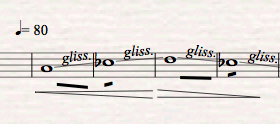
Timpani part in ‘Quayside’ 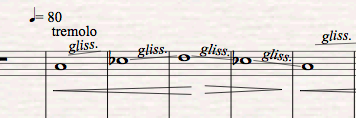
Cello part in ‘Quayside’
Scholars have pointed to Northumbrian poet Basil Bunting’s work, and related it to the most famous work of art conceived in the North East of England; the Lindisfarne Gospels. Bunting scholar Pete Makin illuminates connections between the gospel and modernist poetry: ‘the painter has reduced the many roundnesses of the animal’s head to three flat planes’, which is thus named ‘simplification: to find the essential line that suggests.’ (Pete Makin, Bunting: The Shaping of his Verse, (Oxford, Clarendon Press, 1992) p.222-223) The music here hopefully finds the essential line, and uses this line for ‘pattern making’, in a ‘geometrized’ way, which clearly relates to the Northumbria aesthetic. (p.223-224) I find the minimum amount of lines in my composition to conceive the object and then I weave this into a larger pattern through repetition and slight change of motif, which moves towards a centre, and then the pattern comes back out again.
Echternach and Gospel of St. Mark from Lindisfarne Gospel dated around 700 ( images from Pete Makin, Bunting: The Shaping of his Verse, (Oxford, Clarendon Press, 1992)
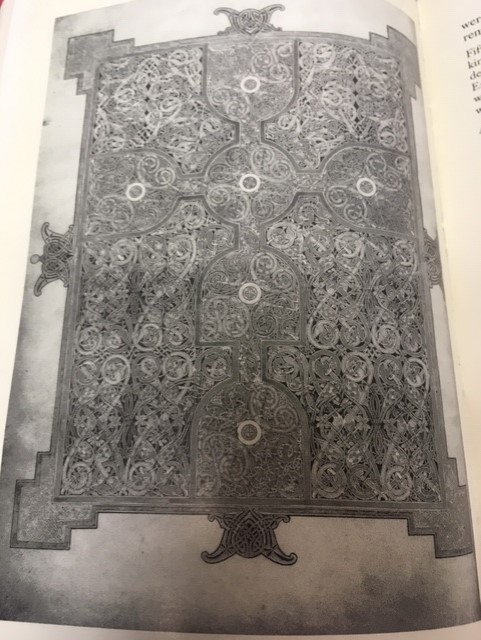
Lindisfarne Gospel, cross-carpet page introducing the Gospel of St Mathew, British Library 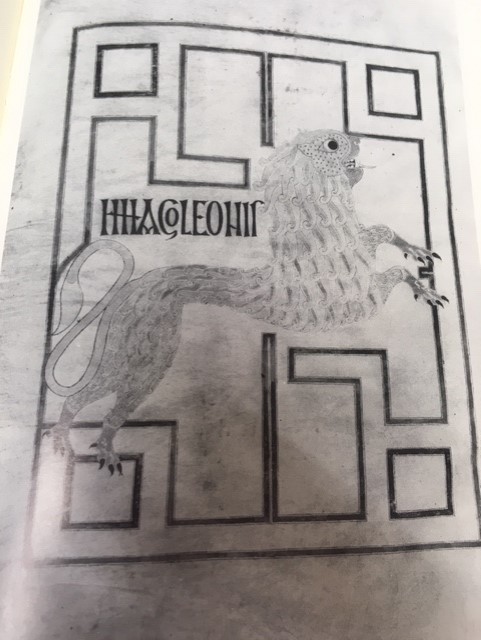
Echternach Gospels, symbol of St Mark, Bibliotheque National
Here, like Bunting’s poetics, I attempt to capture the essence of place, which includes parts of its history. Considering the North East of England and not to consider an aesthetic history here would have been a missed opportunity to capture the local. This compositional technique ties the lyrical and the music, the semblance and the soul so to speak, to locality. The historical is embedded in aesthetic decisions here, which creates a grander emphasis on particular local histories, which again, speaks to translocal experience. The local does not refer to an aggressive patriotism, but an immediate surface where one can see the effects of systemic problems.
Work in progress motifs from the score



 Composing the North East